


It’s easy to assume that sewer repair costs come down to one question: dig or don’t dig. But the real traditional vs trenchless cost analysis tells a far more nuanced story, one that factors in your yard, driveway, and even how long you can live without a functioning sewer line. For homeowners, understanding these hidden layers can make the difference between a smart investment and an unexpected expense.
The insights ahead break down how surface conditions, restoration work, and project speed shape the true bottom line. Before you decide whether traditional trenching or trenchless technology fits your property and budget, let’s unpack the cost comparisons that reveal where the real savings lie.
Key Takeaways
- Restoration costs from damaged concrete, pavers, or landscaping can double excavation totals, making trenchless sewer repair more cost-effective for improved properties.
- Traditional trenching often costs less when only basic soil or lawn covers the sewer line, since restoration is minimal.
- Trenchless repair costs 30–50% more upfront but saves on restoration, finishes 1–2 days faster, and minimizes property disruption.
- Driveway or patio replacement alone can add $3,000–$5,000 to a dig project, while trenchless usually requires only small access patching.
- Properly installed trenchless liners can last 50+ years, delivering strong long-term value and fewer future repairs.
- The smartest traditional vs trenchless cost comparison starts with what’s above the pipe; hardscapes favor trenchless, while open yards often suit traditional digging.
See the Full Picture Before You Start Digging
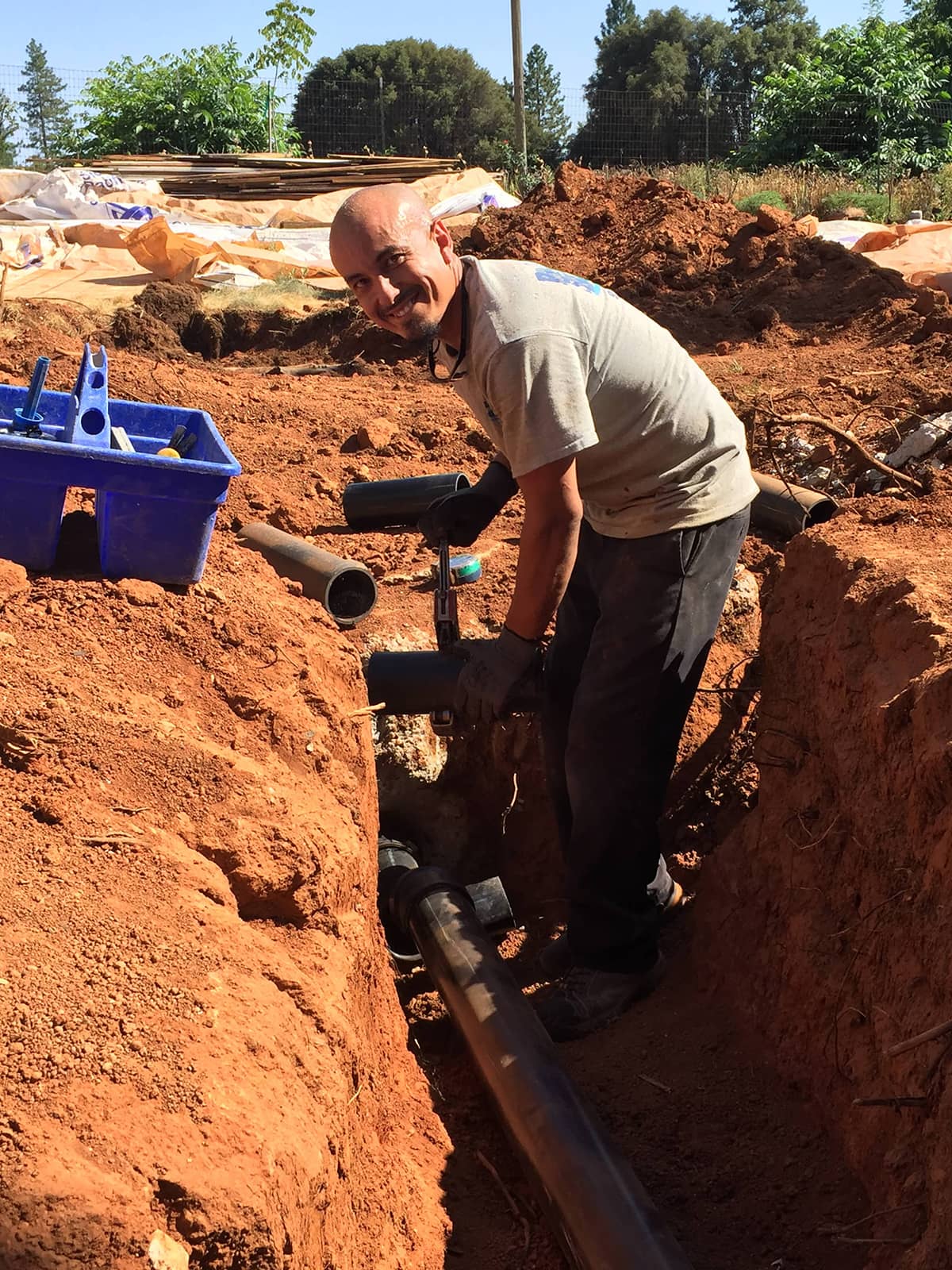
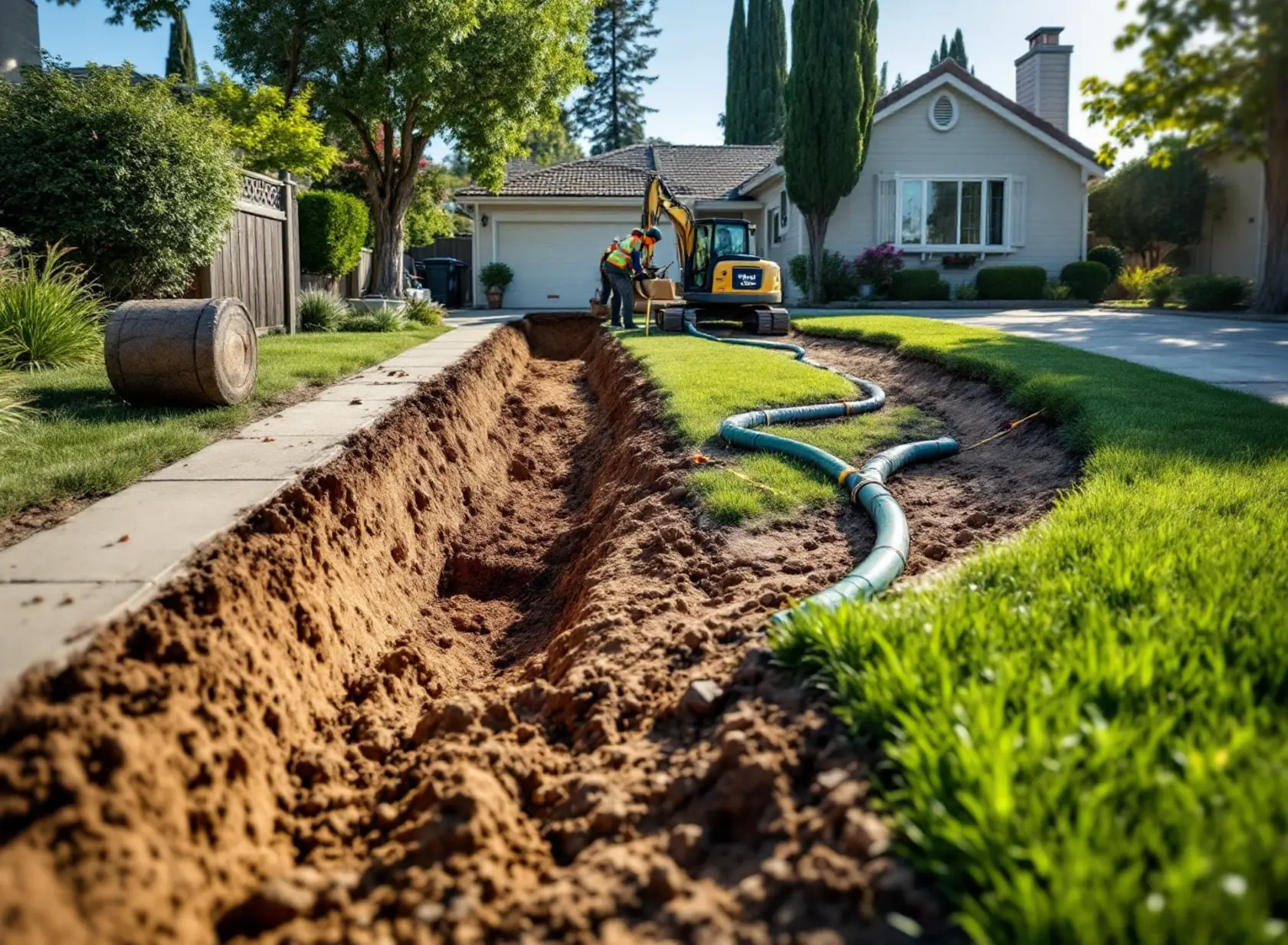
Imagine two versions of the same day. In one, your driveway is broken into panels, the front lawn is a dirt trench, and you’re scheduling weeks of cleanup. In the other, your yard and hardscape look almost exactly the same as yesterday. That visual is the fastest way to understand traditional vs trenchless cost: it’s not just about how we fix the pipe, it’s about what we disturb to get there. Traditional digging uses an open trench to expose and replace pipe. Trenchless is a “no-dig” or “less-dig” approach that repairs or replaces pipe through small access points, keeping surfaces largely intact. If you’re weighing dig vs no dig price, remember your final tab includes the pipe work plus anything above it that’s damaged and restored.
If you want to see how a no-dig solution might apply to your home, explore our trenchless options on the Trenchless Pipe Repair service page.
What “Traditional vs Trenchless Cost” Really Means for Homeowners
When Sacramento homeowners search traditional vs trenchless cost, the answer they’re really after is bigger than a per-foot number. It’s: What will my yard look like after? How long will my driveway be out of commission? Will I need to replant my entire front landscape? For homes with patios, pavers, mature trees, and stamped concrete, the trenchless sewer repair cost often becomes the value play because surfaces and plantings remain largely untouched. If your yard is mostly open soil or basic grass with easy access, traditional digging may be cost-effective overall. The right choice depends on what’s above the pipe and how much disruption you’re willing to live with. For method-specific details and local scheduling, start with Trenchless Sewer Repair Sacramento for expert support.
Quick Overview: How Each Method Works
Traditional excavation replaces the pipe through an open trench from the house to the street connection. CIPP lining installs a resin-impregnated liner that cures in place to create a new pipe inside the old one. Pipe bursting pulls a new HDPE pipe through the old pipe, fracturing it outward as the new line takes its place. For a reality check on price expectations, consumer cost guides commonly place sewer line work around $50–$250 per linear foot, depending on method, depth, access, and site conditions, which aligns with typical Sacramento plumbing projects you may see bid locally. For a deeper dive into the no-dig process, see How Trenchless Pipe Lining Works.
| Method | Basic Process | Cost per Linear Foot |
|---|---|---|
| Traditional digging | Open trench; remove and replace old pipe | $50–$250/ft depending on depth, length, access, and surfaces above it [consumer cost ranges] |
| CIPP lining | Insert resin liner; cure to form a new pipe-in-pipe | Typically mid-to-high range per foot when factoring resin and curing equipment |
| Pipe bursting | Breaks old pipe outward while pulling in new HDPE | Often competitive with full replacement over longer runs |
Note: Per-foot figures vary by depth, soil, utilities, and restoration scope, so view them as a starting point when comparing traditional vs trenchless cost.
The Real Cost Battle: Digging vs No-Dig Breakdown
Base Installation Cost Comparison (Traditional vs Trenchless per Linear Foot)
When you strip away restoration and just compare raw install numbers, trenchless vs traditional sewer repair cost often overlaps, especially in Sacramento where depths, utilities, and clay soil can influence labor and equipment needs. Here’s a quick per-foot snapshot to help you start apples-to-apples before you layer in restoration and project timeline.
- Traditional excavation
- Labor: trenching crew, shoring, spoil hauling, and backfill
- Materials: new pipe, bedding, fittings
- Typical driver: depth and obstacles significantly swing totals
- Trenchless (CIPP or bursting)
- Labor: lining or bursting crew, curing or pull equipment
- Materials: resin liner or HDPE pipe, access pits
- Typical driver: mobilization and specialty materials
Curious when pipe bursting is the better no-dig choice? Compare scenarios on our Pipe Bursting page.
Factors That Influence Traditional Digging Cost
Traditional excavation costs rise with:
- Depth and length: deeper digs require shoring and more labor
- Soil conditions: hardpan, clay, or saturated soils slow production and add disposal fees
- Surface materials: concrete, pavers, retaining walls, and tree roots increase demo time, protection, and restoration scope
- Utilities and access: gas lines, water services, and tight side yards add hand digging and safety measures
- Disposal and import: hauling spoils offsite and importing base or aggregate for backfill
Trenchless Pricing Variables Homeowners Overlook
Trenchless pipe repair cost comparison gets clearer when you include:
- Resin type and thickness (CIPP): structural vs non-structural liners and cure method
- Liner or pipe length: mobilization is fixed; longer runs amortize setup better
- Access points: creating small launch pits and cleanout access
- Pre-cleaning and reinstatement: heavy root cutting and cutting back laterals add scope
- Host pipe condition: offsets, collapses, or backfall may require spot digs or design changes
Why Restoration Costs Change Everything
Here’s where the choice really flips: property restoration costs. Trenchless plumbing Sacramento homeowners choose often avoids tearing up driveways, patios, or mature landscaping, which can add thousands to a “cheap” dig bid. Federal transportation research notes that trenchless rehabilitation techniques can avoid pavement removal and reduce surface restoration compared with open-cut excavation, directly affecting total project cost and disruption trenchless methods can avoid pavement removal. And if your sewer runs under a driveway, replacing it isn’t trivial: homeowner guides commonly place concrete driveway replacement in the ballpark of $4–$8+ per square foot, with higher-end finishes costing more concrete driveway cost ranges.
Hidden costs that push the “dig” option higher include soil compaction and settlement repairs, irrigation fixes, and the time your driveway or patio is unusable. For example, a Land Park homeowner with a sewer under a stamped concrete driveway saved weeks of downtime by choosing CIPP; the line cost a bit more per foot than a dig bid, but the avoided concrete demo and re-pour more than offset the premium. Similarly, a Midtown project avoided removing a mature Japanese maple by bursting under the root zone, eliminating the risk and replacement cost of a signature tree.
Hidden Restoration Costs to Budget For
- Broken or cracked concrete panels that must be re-poured
- Paver or flagstone lift, storage, reinstallation, and compaction
- Irrigation line repairs, valve boxes, and controller reprogramming
- Sod replacement and soil remediation for settlement
- Fence or gate removal for equipment access and reinstallation
- Tree and shrub protection or replacement
For a homeowner-friendly planning brief, read Read This Before Trenchless Sewer Replacement.
When It’s Worth Paying More Upfront
The Long Game: Speed, Durability, and Lifetime Value
Paying a little more per foot can make sense when you gain time, surface preservation, and longevity. Trenchless liners are engineered for multi-decade service life, and industry guidance frames CIPP as a structural solution designed for long-term performance in residential laterals trenchless good practices. On speed, trenchless projects frequently finish in 1–2 days, which reduces labor hours and gets your home back to normal faster. That time savings matters for families juggling work, kids, and driveway access. When you factor avoided restoration and faster completion, the traditional vs trenchless cost difference often narrows or flips in favor of no-dig. Planning to update more of your home’s plumbing system? Our Complete Guide to Home Repiping has tips to coordinate larger projects efficiently.
How Much Time Each Method Actually Takes
Time equals labor dollars and household disruption. In many Sacramento residential settings:
- Trenchless (CIPP or bursting): 1–2 days for cleaning, lining or bursting, curing, and reinstating laterals. Surfaces remain usable or return to service quickly.
- Traditional excavation: 3–7+ days depending on length, depth, weather, and restoration. Add days for concrete cure time and landscaping.
If you need your driveway for daily commutes or have limited street parking, that added week of disruption can be the deciding factor in your traditional vs trenchless cost equation.
Choosing Based on What’s Above, Not Just What’s Below
Surface-Type Guide to Smarter Spending
Think of your yard like a cost map. The “what’s above the pipe” test helps you choose wisely:
| Surface Above the Pipe | Risk of Damage with Digging | Typical Restoration Complexity | Smart Lean (Cost Perspective) |
|---|---|---|---|
| Bare soil or basic lawn | Low | Low: seed or sod, minor grading | Traditional digging can win on raw price |
| Concrete driveway or patio | High | Moderate–High: demo, rebar, pour, cure | Trenchless often wins after restoration costs |
| Pavers, stone, or stamped concrete | High | High: lift, store, rebase, relay, seal | Trenchless premium is usually negligible |
| Mature trees or landscaping | High | High: root protection or plant replacement | Trenchless avoids removal and replanting |
If your surface profile points toward trenchless, or you want a second opinion before deciding, compare options with our Repiping Services team to see total cost impacts clearly.
Real Sacramento Cost Examples
Local Pricing Scenarios and Project Snapshots
Real-world snapshots show how totals shift:
- East Sacramento, 48 ft under lawn: Traditional dig was lowest total. Minimal obstacles, shallow depth, easy restoration.
- Land Park, 32 ft under stamped driveway: Trenchless lining beat digging after factoring demo, rebar, pour, and 7-day cure. Family kept two-car access through the job.
- Arden-Arcade, 60 ft crossing irrigation-heavy front yard with two large shrubs: Pipe bursting avoided irrigation rebuild and plant replacement. Even with a slightly higher per-foot rate, the no-dig total was lower than excavation plus restoration.
These Sacramento trenchless case studies illustrate a simple rule: the denser and more valuable your surfaces, the more likely trenchless wins the traditional vs trenchless cost comparison.
Professional Tip: Understand City Permit Requirements
Beyond method costs, permits can affect your budget and schedule. If any portion of your project touches the public right-of-way, Sacramento requires an encroachment permit, which can add review time and fees encroachment permit requirements. Your plumber should flag this early and coordinate timing. A thorough pre-bid sewer camera inspection also clarifies scope and helps prevent change orders; book one here: Sewer Camera Inspection.
Practical Implementation: Planning, Budgeting & Avoiding Mistakes
Step-by-Step Budget Planning Checklist
Use this quick path to get an apples-to-apples total:
- Inspection: Schedule a camera inspection and locate utilities; request a recording for your files.
- Diagnosis: Confirm whether your issue is roots, offsets, bellies, breaks, or corrosion.
- Method fit: Ask for both a dig and a no-dig option when feasible.
- Material choice: Compare CIPP lining vs pipe bursting vs PVC replacement, including warranties.
- Labor estimate: Clarify crew size, projected days, and what’s included in cleanup.
- Restoration line items: Driveway or patio, pavers, irrigation, sod, tree protection, compaction.
- Permits: Confirm city permit needs, fees, and timelines.
- Access planning: Where will pits go? Will parking or gate access be impacted?
- Contingency: Add 10–15% for unexpected utilities, deeper sections, or extra reinstatements.
- Final apples-to-apples: Build a side-by-side total with restoration, time, and warranty.
If you want a local no-dig estimate alongside a dig comparison, start with Trenchless Sewer Repair Sacramento to see the full traditional vs trenchless cost picture for your home.
Common Mistakes That Blow Budgets
- Ignoring restoration: A “cheap” dig can double after concrete and landscape repairs.
- Rushing quotes: Fewer details lead to change orders and timeline slips.
- Skipping permits: Delays and fines can erase any savings.
- Not verifying the contractor: Experience with both methods matters for fair, unbiased recommendations.
- Overlooking access planning: Tight yards and tree roots can add days.
- Failing to compare warranties: A longer liner or pipe warranty can justify a small premium.
Avoid these traditional vs trenchless cost overruns by insisting on a camera inspection, a written scope, and a complete line-item estimate.
Pipe Bursting vs Pipe Relining: Which Gives Better Value?
When to Burst vs When to Re-Line
Both are trenchless, but they solve different problems:
- Choose pipe bursting when the host pipe is collapsed or badly deformed, you want a full-diameter new pipe, or upsizing is desirable. It requires suitable soil and space for a pulling path.
- Choose CIPP lining when the host pipe is generally intact but leaking, root-intruded, or corroded, and you want to minimize surface impact with the fewest access points. It preserves diameter well and is efficient on continuous runs.
- Mixed conditions: Sometimes a short dig fixes a collapsed section, followed by lining the rest.
Still unsure? See our Pipe Bursting page for scenarios and to price a burst vs line comparison on your property.
Expert Insight: How a Sewer Camera Inspection Clarifies Costs
A professional camera inspection with standardized coding gives you the evidence to pick the right repair the first time. Crews trained to NASSCO’s PACP standard document defects consistently so bids and scopes align to the actual condition, which improves pricing accuracy and reduces change orders standardized PACP inspections. Always ask for the video and a defect summary so you can compare bids on the same facts.
Is Trenchless Really Worth It? The Cost Payback Perspective
Long-Term Value vs Short-Term Saving
The payback case for trenchless builds around three things:
- Time: 1–2-day turnaround vs a week or more of open trench work
- Surfaces: Avoided demo, hauling, re-pour, and landscaping
- Longevity: Modern liners and HDPE or PVC pipes are designed for decades of service
If your line runs under concrete, pavers, or prized landscaping, trenchless payback often appears immediately because you skip high-ticket restoration and weeks of inconvenience. If your yard is open and accessible, traditional can be the true low-bid winner. That’s why the traditional vs trenchless cost decision should start with a map of what’s above the pipe, not just what’s underground.
How to Decide Confidently Based on Your Home’s Layout and Budget
Use this quick decision filter:
- Mostly lawn and easy access? Start with a dig quote, then ask for a trenchless alternate to confirm the spread.
- Under concrete, pavers, or trees? Start with trenchless and price restoration as a separate line item for the dig option.
- Tight timelines or shared driveway? Time is money; factor daily impact and parking access.
- Planning other upgrades? Coordinate work to share mobilization and reduce duplicate restoration.
Mini decision flow:
- Do surfaces above the pipe cost more than 25–35% of a dig bid to replace? If yes, trenchless is likely the better total value.
- Are there collapsed sections? Consider targeted digs plus lining, or pipe bursting if upsizing is helpful.
- Unsure? Get both estimates and compare totals, including restoration and time. That’s the real traditional vs trenchless cost picture.
Expert Takeaways from Sacramento Plumbing Solutions
Insider Advice for Making the Right Call
- Start with facts: a PACP-coded camera inspection and a utility locate reduce surprises.
- Price the whole project: installation, restoration, time, and warranty, not just per-foot.
- Expect method-neutral advice: good contractors bid both traditional excavation vs trenchless replacement so you can choose based on your property, not their equipment.
- Plan access early: mark potential pit locations, protect trees and irrigation, and discuss driveway usage.
- Keep neighbors in the loop: shared fences, alleys, and driveways benefit from a schedule heads-up.
For more homeowner prep, see Read This Before Replacement so you’re ready to pick a method with confidence.
Trust the Team That Offers Both Options
You deserve recommendations shaped by your property, budget, and timeline, not by a one-size-fits-all method. Our crews install both traditional and trenchless solutions every week in Sacramento’s diverse soils and neighborhoods. That balance lets us explain realistic trade-offs, build accurate totals, and keep what’s above the pipe front and center while we restore what’s below it.
Why Homeowners Love Sharing Before-and-After Results
There’s a reason trenchless success stories Sacramento homeowners share get so much attention: the “after” looks like nothing ever happened. No broken driveway photos. No yard torn end to end. Just a functioning sewer and a normal routine by dinnertime. If you choose a dig solution, documenting the restoration can be just as satisfying: fresh concrete, replanted beds, and a line you can trust. Whichever path you choose, snap a few photos, note the timeline, and share your experience to help your neighbors compare traditional vs trenchless cost the right way, by total value, not just a per-foot number.
Sources cited for verification:
- Typical consumer ranges for sewer line replacement cost per foot [consumer cost ranges]
- Trenchless can avoid pavement removal and reduce surface restoration [trenchless methods can avoid pavement removal]
- Concrete driveway replacement cost ranges [concrete driveway cost ranges]
- City of Sacramento encroachment permits for right-of-way work [encroachment permit requirements]
- NASSCO PACP standard for CCTV inspections [standardized PACP inspections]
- Trenchless good practices and long-term performance framing [trenchless good practices overview]
Making the Smart Investment in Your Home’s Future
When it comes to comparing traditional vs trenchless cost, the real value is found in what you preserve: your time, your yard, and your peace of mind. Sacramento homeowners who look beyond the price per foot and consider restoration, downtime, and long-term reliability make the most budget-smart decisions. Choosing the right method starts with understanding what’s above the pipe as much as what’s below it. Whether that means a quick trenchless fix under concrete or a straightforward dig through open soil, having both options fairly presented gives you control over your outcomes and costs. Ready to see your property’s best path forward? Schedule a camera inspection or consultation with Sacramento Plumbing Solutions and take the first confident step toward a seamless, lasting plumbing solution for your home.